
Scicli: what to see, where to go, and why it’s worth a stop
Scicli is one of the most representative towns in south-eastern Sicily, able to combine Baroque architecture, natural landscape, and everyday life in a rare balance.
Its historic center unfolds between limestone hills and natural valleys, creating a unique urban structure within the Sicilian landscape.
Scicli is not a destination isolated from its surroundings, but a point of connection between the inland area of the Val di Noto and the Mediterranean coast—a town that expresses its identity through space, stone, and its continuous relationship with the territory.
Where is Scicli and which province does it belong to?
Scicli is located in the south-eastern part of Sicily and belongs to the Free Municipal Consortium of Ragusa.
Its geographical position is strategic, as it allows easy access to other Baroque towns such as Modica and Ragusa Ibla, as well as the coastal areas along the Hyblean shoreline.
Scicli is part of the Val di Noto, a UNESCO World Heritage Site.
However, it retains a more articulated urban structure, shaped by the natural quarries that cross the territory and have influenced its development over time.

What to do in Scicli in one day
Spending a full day in Scicli allows you to explore both its urban character and its surrounding landscape.
After visiting the historic center, you can move toward the outskirts or head into the nearby countryside, where the rural landscape still preserves its traditional features.
Thanks to its location, Scicli makes it easy to combine architecture, nature, and the sea within the same itinerary.
This creates a varied and well-balanced day, without the need for long or tiring journeys.
What is the sea like in Scicli and how far is it from the center?
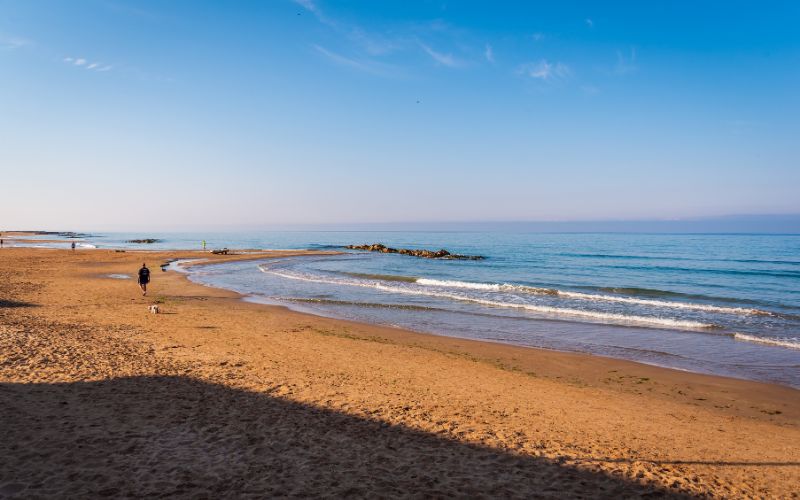
The sea is one of the elements that most enhances Scicli’s appeal.
The beaches are located a short distance from the historic center, generally reachable in about ten minutes by car.
The coastline features wide sandy shores, light-colored sand, and gently sloping seabeds.
This close connection between town and coast allows you to enjoy Scicli without giving up the seaside experience, making your stay more complete and flexible.

What to eat in Scicli and what typical dishes to try
The culinary tradition of Scicli reflects the area’s agricultural and coastal heritage.
Local cuisine is based on simple, seasonal ingredients, with dishes that highlight vegetables, legumes, fish, and baked goods.
Recipes are rooted in traditions passed down over time, where flavor comes from the quality of the ingredients rather than complex preparation.
What is Scicli famous for?
Scicli is well known for its Baroque historic center, its UNESCO World Heritage status, and its connection to the TV series Inspector Montalbano.
However, its reputation also comes from its ability to preserve a strong urban identity without losing authenticity.
It’s a town that continues to live according to its own rhythms, integrating tourism without turning into a staged setting.
Where were Montalbano scenes filmed in Scicli?
Scicli was one of the main filming locations for the Inspector Montalbano series.
The town hall served as the police station, while several streets and squares in the historic center are recognizable in the scenes.
These locations, integrated into the real fabric of the town, enhance its appeal without altering its original urban function.
How to reach Scicli by air
The nearest airports to Scicli are Comiso and Catania Fontanarossa.
From both, the town can be reached by car—this is the most recommended option for moving easily between the various points of interest in the area.
The road connections make it easy to reach both the coast and nearby towns.
How many days do you need to visit Scicli?
Scicli can be visited in one or two days, but it also works well for longer stays as a base for exploring south-eastern Sicily.
Its location allows you to plan daily itineraries between the sea, countryside, and Baroque towns without needing to change accommodation frequently.
Why stay in Ciriga and visit Scicli during your trip
Choosing to stay in Ciriga and visit Scicli during your trip is a way to experience the area at its best.
The coast of Ciriga is an ideal base for those who want to stay near the sea, immersed in a natural setting, while still maintaining quick access to one of the most interesting historic towns in south-eastern Sicily.
Staying at Ciriga Sicily Glamping allows you to experience Scicli as a day trip, without giving up open spaces, sea light, and a less urban environment for your stay.
This way of organizing your trip lets you dedicate your time in the city to exploring its architectural and cultural heritage, and then return to the coast, where your stay continues in a more natural and relaxed atmosphere.
After a day spent among Baroque churches, historic buildings, and urban views, returning to Ciriga creates a clear shift in scenery.
Here, the experience continues with moments of wellbeing—such as relaxing in the jacuzzi or enjoying an aperitivo outdoors as the sun sets on the horizon.
It’s a way of traveling that doesn’t overlap city and sea, but separates them in a functional way—allowing you to fully appreciate both.
Why choose Scicli as a day trip from Ciriga
Including Scicli as an excursion during a stay in Ciriga allows you to discover one of the most representative towns in south-eastern Sicily without giving up the freedom of staying near the sea.
Scicli is perfect for a day visit thanks to its proximity and the compact nature of its historic center.
It offers cultural depth, architecture, and identity—without requiring an overnight stay in an urban setting.
By visiting it from Ciriga, Scicli becomes part of a broader experience, where discovering the territory alternates with moments of wellbeing and outdoor living.
Within this balance, Ciriga remains the anchor of your stay, while Scicli enriches your journey with its history and unique character.